Make Your Act 60 Contribution Matter — Help Fund Service Dogs for Children in Puerto Rico
Your contribution may qualify for the general nonprofit portion of your Act 60 annual giving requirement while helping launch Caribbean Canine Academy’s “10 Service Dogs for 10 Children in Puerto Rico” pilot. Donors should confirm eligibility with their CPA, tax advisor, or Act 60 compliance attorney.
Suggested Act 60 general nonprofit contribution level: $5,000. Donors may enter $5,000, a higher amount, or another gift amount that aligns with their giving plan. Please confirm your specific Act 60 requirements with your CPA, tax advisor, or Act 60 compliance attorney.
Three simple steps.
Choose your contribution amount.
Enter the amount that aligns with your Act 60 giving plan or personal giving intention.
Complete your donation online.
Complete your donation through the secure Stripe link. No phone call or packet request required first.
Request donor acknowledgment documentation.
Request donor acknowledgment documentation for your CPA, tax advisor, or Act 60 compliance file if needed.
The Mission Behind Your Contribution
This is not simply a dog training project. It is a structured service dog and family-support initiative designed to create measurable impact for children and families in Puerto Rico.
Caribbean Canine Academy’s “10 Service Dogs for 10 Children in Puerto Rico” pilot will train and place service dog teams with children whose conditions significantly affect daily functioning, safety, regulation, independence, and family stability.
Who This Project Helps
Many families in Puerto Rico face the daily challenge of supporting children whose conditions seriously affect functioning, safety, regulation, independence, and participation in family, school, and community life.
This may include children with autism requiring substantial support, diagnosed psychiatric conditions, severe anxiety, trauma-related symptoms, behavioral, sensory, or nervous system dysregulation, significant sensory challenges, seizure disorders or epilepsy, Type 1 diabetes or other medical-alert needs, physical or mobility disabilities, hearing impairment, elopement behaviors, safety-related crises, or other conditions that seriously limit the child’s independence, family stability, and daily participation.
Each child/dog team will be evaluated individually for need, safety, family readiness, dog suitability, and appropriate fit.
Service dogs for children whose families need them most.
Your contribution helps fund Caribbean Canine Academy’s “10 Service Dogs for 10 Children in Puerto Rico” pilot — a founder-led initiative to train and place service dogs with children whose conditions affect safety, regulation, independence, medical stability, mobility, hearing-related needs, or family functioning.
For some families, leaving the house is not simple. A transition, a panic episode, a seizure risk, sensory overload, or a moment of elopement can change the entire day. A properly trained service dog can become part of a child’s safety, regulation, independence, and daily rhythm — while also helping the family breathe again.
Each dog is part of a structured support model that includes professional training, family education, follow-up support, safety standards, and responsible placement.
- Family application and screening
- Dog selection or suitability evaluation
- Dog acquisition, selection, or preparation
- Veterinary screening and wellness requirements
- Foundation training
- Disability-related task training
- Public access preparation when appropriate
- Family handler education
- Equipment and training materials
- Follow-up support
- Program documentation
- Ethical sponsor or donor impact reporting while protecting family privacy
- Graduation or placement recognition when appropriate
Examples of Service Dog Tasks
Task training will depend on the child’s needs, the dog’s suitability, safety, and professional evaluation.
- Behavioral regulation support
- Sensory regulation support
- Nervous system regulation support
- Interruption of distress or panic behaviors
- Grounding support
- Deep pressure when appropriate
- Medical alert or response when appropriate
- Seeking help from a parent or caregiver during a crisis or seizure
- Retrieval of medication or supplies
- Mobility-related assistance
- Hearing-related response
- Transition support
- Other disability-related tasks based on the child's needs and the dog's suitability
Service dog training and placement decisions depend on dog suitability, family readiness, safety considerations, professional evaluation, and the individual needs of the child. This program does not guarantee medical outcomes and does not replace clinical care.
10 Children. 10 Service Dogs. 10 Families Supported in Puerto Rico.
Phase One will train and place 10 service dog teams with children in Puerto Rico. Each child/dog team may require approximately $15,000–$25,000 depending on dog selection, training needs, veterinary care, equipment, family education, and follow-up support.
- Estimated cost per child/dog team: $15,000–$25,000
- Estimated pilot need: $150,000–$250,000
- Current phase: Seeking founding donors and sponsors
- Location: Puerto Rico
- Organization: Caribbean Canine Academy
- Founder-led service dog initiative
Led by Cheryl DeLoach and Caribbean Canine Academy
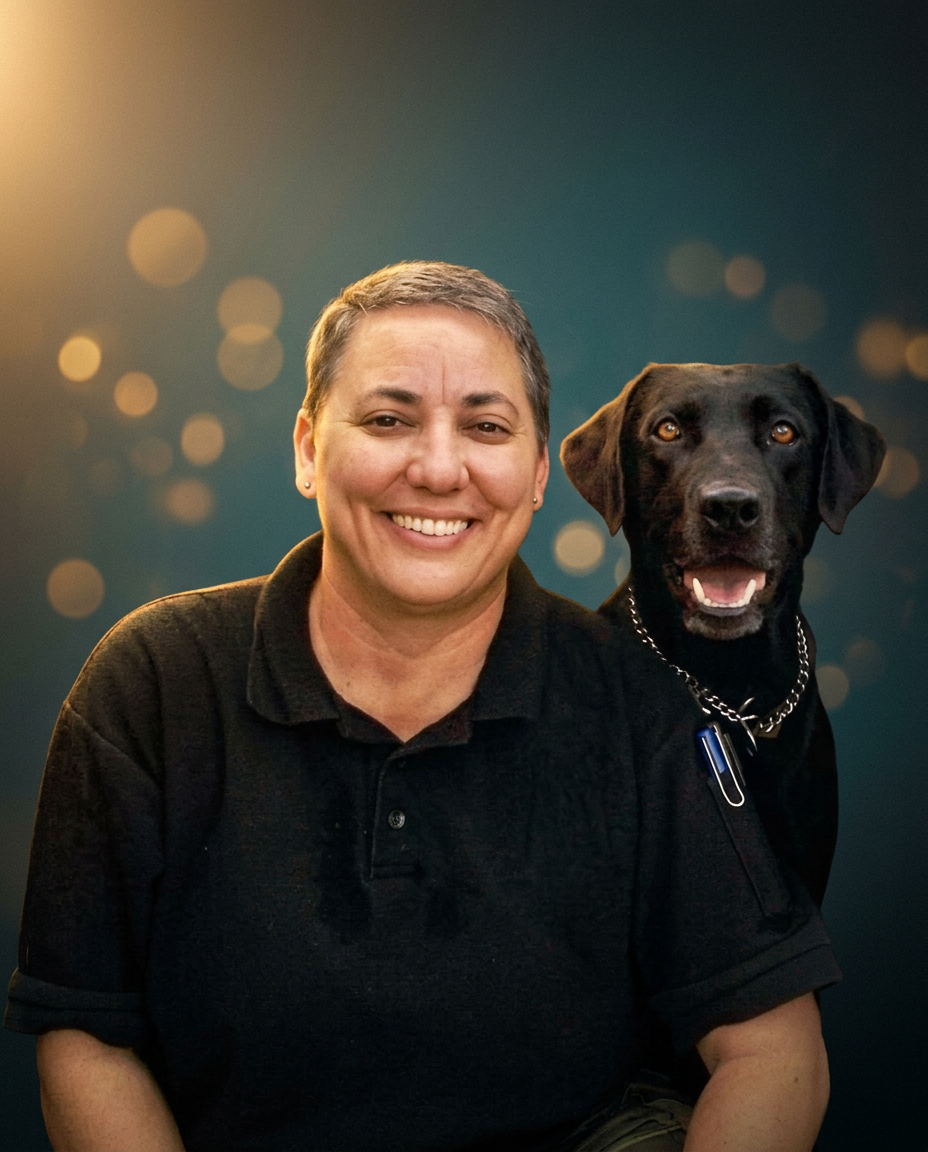
Cheryl DeLoach is the founder and program lead of Caribbean Canine Academy in Puerto Rico. She is a respected dog trainer and trainer of professional dog trainers, with experience training service dogs and working with dogs, families, and students of canine training.
Her work integrates practical obedience, responsible handling, clear communication, regulation, safety, and human education. She also has specialized scent-detection experience, including explosives detection work, which strengthens her ability to evaluate dogs, develop structured training plans, and understand how canine skills can support functional tasks, safety, alerting, and responsible service dog preparation.
- Puerto Rico-based
- Professional dog training experience
- Service dog training experience
- Family-centered education
- Ethical service dog focus
- Built for expansion
Measurable Impact
This pilot is designed to be documented, reviewed, and strengthened. The program will track training milestones, family education, placement readiness, follow-up support, and family-reported quality-of-life indicators.
- Family confidence and caregiver stress reduction
- Child behavioral, sensory, and nervous system regulation support
- Safer transitions at home, school, and public settings
- Increased participation in family and community outings
- Sleep, routine, and daily-structure support when relevant
- Reduction of safety risks such as elopement, panic, disorientation, or crisis escalation when applicable
- Handler skill development and family follow-through
- Service dog training milestones and task reliability
- Post-placement adjustment and follow-up progress
- Family quality-of-life feedback
Starting With Children. Building a Broader Service Dog Access Model for Puerto Rico.
The first phase focuses on training and placing 10 service dogs with children in Puerto Rico whose conditions significantly affect daily functioning, safety, regulation, independence, or family stability.
The larger vision is to expand beyond the first 10 children and build a sustainable service dog access model for Puerto Rico — one that can eventually support more children, families, adults with disabilities or qualifying support needs, veterans, trauma survivors, and individuals with medical-alert, mobility-related, hearing-related, psychiatric, or other service-dog needs.
Built With Care for the Child, the Family, the Dog, and the Community
Child-centered placement
Every placement must be based on the child's needs, safety, and family readiness.
Dog welfare
The emotional and physical welfare of the dog is central to the program.
Ethical task training
Tasks must be relevant, humane, and connected to the child's qualifying needs.
Family education
Families must learn how to handle, protect, and maintain the dog's training.
Transparent reporting
Donors and sponsors may receive responsible program updates and impact summaries while protecting family privacy.
Sustainable community impact
The goal is to build a responsible model for Puerto Rico that creates meaningful impact beyond a single moment of visibility.
Choose Your Contribution Level
Use the secure donation link to enter the amount that aligns with your Act 60 giving plan or personal giving intention.
May align with the general nonprofit portion of an Act 60 donor's annual giving plan.
Helps support a larger portion of the service dog pilot.
Helps fund the full training and placement pathway for one service dog team.
Every contribution helps support the training, placement, care, documentation, and family education connected to the pilot.
Contribution levels are examples. Donors should confirm their specific Act 60 requirements and eligibility with their own CPA, tax advisor, or Act 60 compliance attorney.
The full service dog training pathway.
Dog suitability and temperament evaluation
Veterinary screening and wellness requirements
Foundational obedience
Task training for the child's specific needs
Public access preparation when appropriate
Family handler education
Equipment and training materials
Follow-up support
Program documentation
- Caribbean Canine Academy
- Puerto Rico nonprofit recognized by Hacienda
- IRS 501(c)(3) tax-exempt organization
- Founder-led service dog training initiative
- Serving children and families in Puerto Rico
Documentation available upon request.
Need to Send This to Your Advisor?
Use this form only if you need nonprofit documentation, an advisor packet, or want to speak with us before donating. To donate directly, use any donate button on this page.
Acknowledgment for your records.
Donors may request acknowledgment documentation for their records, CPA, tax advisor, or Act 60 compliance file. Caribbean Canine Academy is recognized as a nonprofit organization in Puerto Rico and as a 501(c)(3) tax-exempt organization by the IRS.
Please consult your own tax advisor regarding deductibility, Act 60 compliance, or other tax-related questions.
Caribbean Canine Academy is a Puerto Rico nonprofit recognized by Hacienda under Section 1101.01 and recognized by the IRS as a 501(c)(3) tax-exempt charitable organization. Contributions may qualify for the general nonprofit portion of Act 60 charitable contribution requirements. Donors should consult their tax advisor, CPA, or Act 60 compliance attorney to confirm applicability to their specific decree and annual compliance filing.
Act 60 donor questions.
Ready to make your Act 60 contribution with purpose?
Your gift can help launch service dog teams for children in Puerto Rico while supporting a local nonprofit organization with Hacienda and IRS recognition.
Documentation for your advisor or your records.
Use this form only if you need nonprofit documentation, an advisor packet, or want to speak with us before donating. To donate directly, use any donate button on this page.
This page is for informational purposes only and does not provide tax, legal, medical, or compliance advice. Contributions may be tax-deductible to the extent allowed by law. Donors should consult their tax advisor, CPA, attorney, or compliance professional regarding their specific situation and annual compliance filing.